Today, only two months into 2026, countless groundbreaking and exciting pop culture events have already taken place. Moments like the Grammys, the Super Bowl, and the Winter Olympics in Milan have excited individuals worldwide and spurred countless conversations online, in the media, and in people’s daily lives.
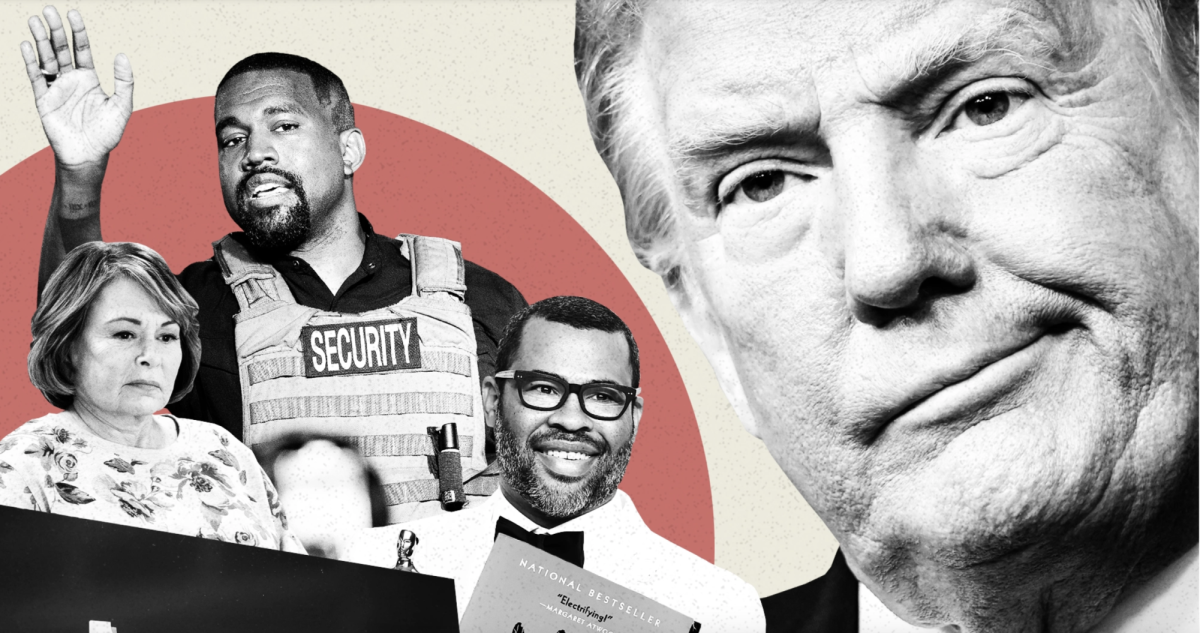
However, despite the glamour, energy, and joy that these events typically bring, this year, a serious and often controversial political undertone has been unavoidable in almost all facets of popular culture. Following Trump’s reelection in 2024, America has been filled with sociopolitical polarization – the increasing ideological, social, and affective divide where individuals and groups move toward extreme positions, causing intense distrust, hostility, and reduced interaction between opposing sides. The surmounting presence and aggression of ICE, gun violence, and other nationwide debates on topics such as abortion laws, censorship, and LGBTQ+ rights have inspired numerous public figures to speak out. On social media, various celebrities have posted Instagram stories with political messages, whether it be a quote from a political figure, a news article about a recent event, or a graphic urging people to take action and call their senators. Conversely, other public figures have chosen to remain quiet. In this case, it’s likely that their comment sections will be filled with messages such as “Why aren’t you speaking out?” or “Silence is complicity”.
For many, the inescapable presence of politics in pop culture is welcome as a way to unify people and inspire change. For others, politics in pop culture is seen as unnecessary, or even unwelcome.
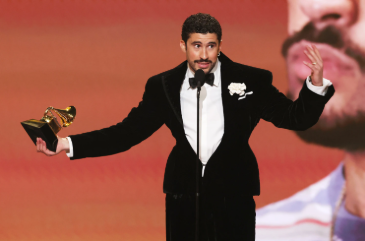
This division can be seen through the response to this year’s Grammy awards. Multiple celebrities in attendance, such as Billie Eilish, Justin and Hailey Bieber, and Kehlani sported “ICE OUT” pins on their red carpet outfits. Additionally, award recipients such as “Album of the Year” winner Bad Bunny and “Best New Artist” Olivia Dean made political statements in their acceptance speeches. “We are not savage, we’re not animals, we’re not aliens. We are humans and we are Americans,” said Bad Bunny in a moment that was reposted, liked, and interacted with countless times on social media in the following days. The general public’s reaction to these speeches were mixed. Many people praised these artists for using their platform to speak out on the violence and unrest within the country. Others, including President Trump himself, were publicly enraged. Shortly after the ceremony ended, Trump took to Truth Social, (his own conservative focused social media app) where he called the event “garbage” and “unwatchable”, even threatening to sue host Trevor Noah.
Similar partisan reactions were evident following Bad Bunny’s Super Bowl LIX halftime show, which was full of intentional political symbolism and messaging. While he didn’t make any direct political speech, the show was widely interpreted as a call for empathy and inclusion. His performance was a celebration of unity, togetherness, and cultural pride, and yet was partially received with anger and hate. President Trump (again) harshly criticized the performance on Truth Social, and some conservative viewers even opted to watch an alternative Turning Point USA halftime show instead of Bad Bunny’s.
Some music artists are doing more than just posting on social media, choosing to actively incorporate political messaging in their work. For example, in the wake of gun violence throughout America, Gracie Abrams collaborated with Aaron Dessner and Bon Iver to release “Sold Out,””, in which she addresses this pressing issue. The song served as a benefit for Everytown for Gun Safety, the largest gun prevention organization in America that focuses on the need for legislative action. Abrams also frequently uses her platform to advocate for reproductive rights. By doing this, she risks deterring people from supporting her… and yet she does it anyway.
Additionally, it’s not just celebrities who use pop culture as a means of political activism. At the Winter Olympics in Milan, possibly the most major global sporting and pop culture event, one American spectator went viral for holding a US flag that read: “Apologies to the world for our bad behavior, we will fix ourselves!” Similarly, participants in “No Kings” protests in 2025 often used pop culture references in their signs against the Trump administration. “Our President Lies” was displayed on one sign, referencing the hugely popular “Wicked” movie in which the main character Elphaba protests against the Wizard of Oz using a similar phrase: “Our Wizard Lies”. Another sign read “Look what you made U.S. do,” using a clever play on words to reference a song from Taylor Swift’s ‘Reputation’ album.
Instances of pop culture being used for political organizing and advocacy are, in 2026, becoming increasingly frequent. This begs the question: should pop culture be political, and do celebrities have an obligation to be as well?
For some, the answer to this is a strong no. Many view pop culture as an escape from the pressures and negativity of political discourse. They feel that when politics are inescapable even in movies, games, and music, it can be difficult to find ways to relax and truly escape. Some audiences even feel that political ideas are being forced on them by popular media.
However, pop culture is inherently political. Media is made to reflect the current social context, which, in 2026 America, is deeply political. Pop culture isn’t just entertainment, but a mirror of society’s struggles and values: it’s bound to carry political or social messages, whether that be about privilege, race, class, or otherwise.
As for public figures, their platform enables them to influence public opinion or bring recognition to critical issues that may otherwise be ignored. Pop culture can and does have a major political influence, and has for a long time. Think of Taylor Swift, for example. After posting her endorsement of democratic candidate Kamala Harris prior to the 2024 election and urging supporters to vote, nearly 406,000 people clicked on her provided voter registration link. Or, for a more historical example, artists like Bob Dylan and their anti-war songs helped unify people in protest against the Vietnam War. This clearly shows how celebrities have the platform and power to mobilize and influence people. This influence can be a double edged sword, though, so it is important that fans remain informed independently from unbiased sources rather than relying solely on celebrities as moral compasses.
Ultimately, if pop culture were truly apolitical, it wouldn’t be pop culture at all. In 2026, it’s impossible to ignore politics, so if celebrities and pop culture were to do so, then they wouldn’t be truly reflecting modern culture at all. Pop “culture” is just that: a shaper of culture, and those involved in it should do their part to shape culture for the better.