The film Little Women, directed by Greta Gerwig, beautifully captures the essence of love, friendship, sisterhood and girlhood more than perhaps any film before it. Crafted by the acclaimed American actress, writer and director Greta Gerwig, celebrated for her work across both mainstream and independent cinema, this movie reflects her usual sensitivity and depth. Before gaining recognition as a filmmaker for Lady Bird, Barbie and Little Women, she reimagines the classic story through a non-linear timeline, juxtaposing the characters’ youth and adulthood. Her choice adds emotional complexity and a realistic, modern sense to the beloved tale.
Originally published on September 30th, 1868, Little Women was written by Louisa May Alcott as a semi-autobiographical novel inspired by her own life and her three sisters.
Set in the years following the Civil War, the film follows the March sisters as they navigate love, heartbreak and personal identity. Jo, the second eldest, lives in New York working as a writer, while her younger sister Amy studies painting in Paris. There, she unexpectedly reconnects with Theodore “Laurie” Laurence, her childhood friend and Jo’s former admirer. Their eldest sister, Meg, is married to a schoolteacher and faces the reality of domestic life, while the youngest, Beth, battles a tragic illness that ultimately reunites the family.
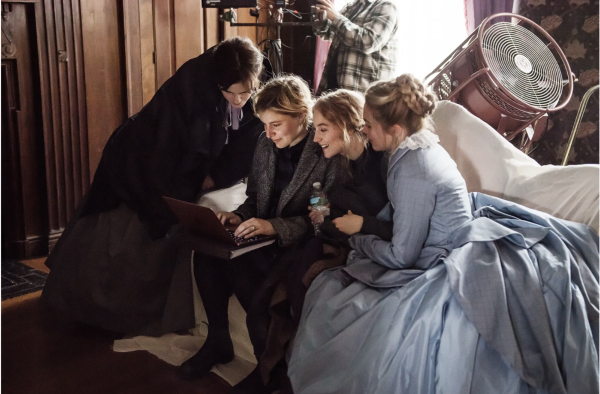
From my first impression, what struck me most about Little Women was how Greta Gerwig managed to refresh such a familiar story without losing the warmth and spirit many people love about it. Her nonlinear storytelling feels like flipping through a scrapbook where laughter and loss are placed right next to each other on the same page. You feel the highs of childhood side by side to the heaviness of adulthood, and it emphasizes how growing up is both beautiful and painful. By blending the past and the present, she shows how the March sisters’ memories shape who they become.
I loved how she gives each sister their own timeless voice. They are living in the 19th century, but their emotions feel as if they could belong to any of us. It’s as if Gerwig built a bridge between then and now, and we can travel across it without ever noticing the years in between.
The acting is what really pulled me in. Saoirse Ronan’s Jo instantly feels alive. Her energy, stubbornness and passion make her impossible to forget, and in my opinion she captures Jo’s fight for independence better than any version I’ve seen. Florence Pugh’s Amy definitely surprised me; instead of just being the “annoying little sister,” she becomes one of the most complex characters in the movie. Watching her grow from childish to self aware made me appreciate her character in a way I never had before.
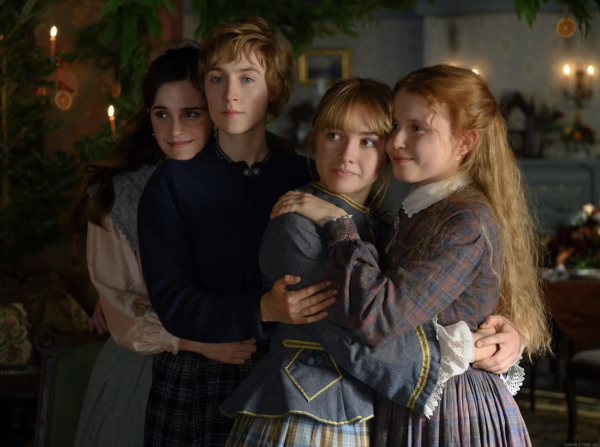
Timothee Chalamet brings a sort of softness to Laurie that makes his relationship with the sisters feel genuine and deep, and Laura Dern and Meryl Streep add both warmth and sharp humor as Marmee and Aunt March. The relationship between the entire cast feels completely natural, like a real family who love each other but aren’t afraid to clash.
Visually, the film is as surreal as a dream. The warm lighting, soft colors and cozy interiors make every scene feel like a memory you’ve lived through yourself. The costumes and sets create a believable 19th century world, but there’s something about the way they’re presented that still feels modern and easy for me to feel and connect with. Alexandre Desplat, a well-known French composer who has created music for many major films, brings his signature gentle and emotional style to the movie as well.
What makes Little Women stand out is how it transforms ordinary life into something extraordinary. Instead of focusing only on romance or tragedy, Greta Gerwig captures the beauty hidden in ordinary moments. Each of the four sisters represents a different path, yet all of them remind us that womanhood is not only one story but many, layered with purpose, fear and bravery.
By the time the film ends, it feels less like watching characters act on a television screen and more like looking into the reflection of your own growing up. This film reminds us that the past is never truly gone, it lives with us in the people we become. Little Women is not just the retelling of a classic; it’s a celebration of remembrance, family and the small instances that shape who we are.