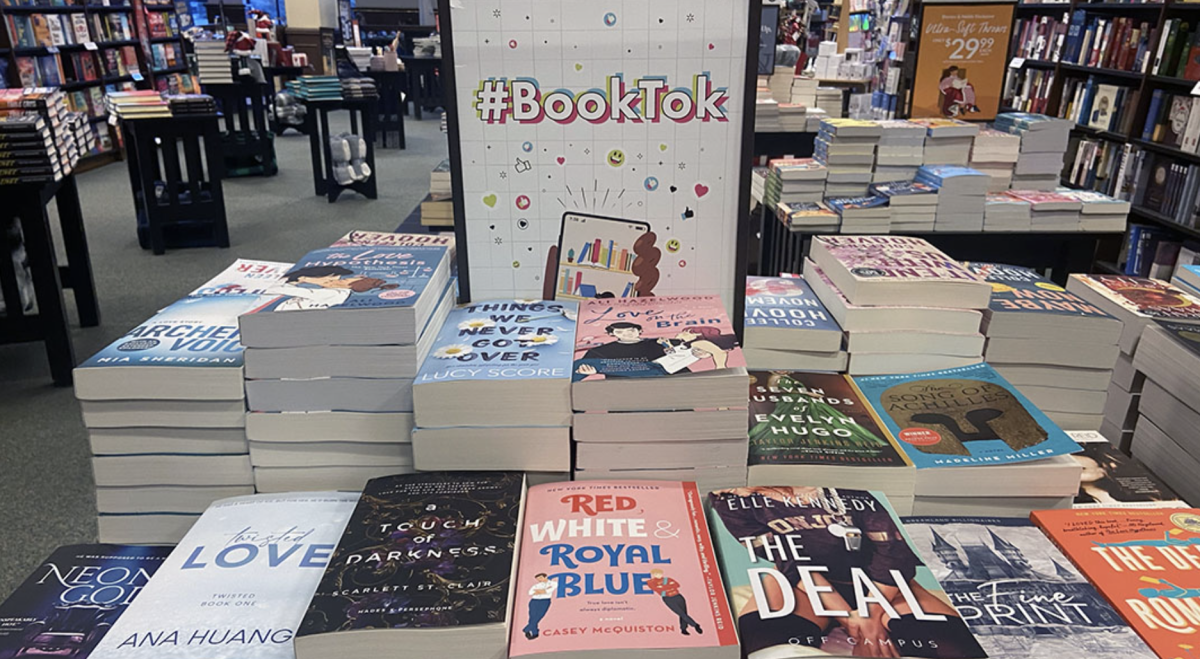
The world ‘literature’ is defined as a written work of superior or lasting artistic merit. Such a description brings to mind timeless classic novels, from Pride and Prejudice to Oliver Twist to Anna Karenina, all of which are embodiments of the excellence and depth that defines literature. However, with how drastically different modern novels look in comparison to those we regard as classics, it is unclear what we consider literature in today’s day in age. Although writing is not a stagnant art, in recent years, the nature of writing has shifted in an unprecedented way that some believe has caused the artistry of literature to become degraded and disregarded. However, this change didn’t begin on the page, but rather on our screens, in a corner of the Internet known as BookTok.
BookTok, which began around 2019 as a small group of readers, authors, and publishers, would ultimately grow into a worldwide TikTok community. At the peak of the Covid-19 pandemic, a time of universal isolation, BookTok was an outlet for readers to come together to share book recommendations, voice opinions on both old and new literature, and even promote their own writing.
The platform brought new life to literature, which many believed to have been a dying form of entertainment. In fact, according to the National Literacy Institute , 54% of adults in the United States read at or below a sixth-grade level. This was further reflected in the closure of over 400 Barnes and Nobles stores across the U.S. leading up to the pandemic. Evidently, in a rapidly advancing world that seems to constantly be moving, most people would rather scroll on social media than pick up a book, leaving the practice of reading fading into obscurity.
That is until BookTok allowed for literature to be enjoyed in those same bite-sized videos that we as a society seem to be forever consuming. Suddenly, reading was a trend. Authors were able to speak directly to readers, promoting their books through cover reveals, interviews, and sharing sneak peeks of their up and coming novels, all of which allowed reading to expand beyond the page and therefore attract a greater audience. Through BookTok, forgotten novels have become mainstream, self-published authors have gained enough recognition to become traditionally published, and first time authors have been able to execute successful book releases.
Not only has BookTok advanced the publishing and marketing industries, but it has also served as a space for readers to discuss and dissect novels, characters, plots, and book adaptations. Such exchanging of ideas kept these stories alive and allowed for readers to think deeper about the words they are reading, which are the ultimate goals of every author.
However, there are two sides to every coin. It appears to some BookTok has perpetuated the common practice of today’s authors to sacrifice thematic complexity and emotional character journeys for easily digestible, gratifying romances riddled with redundant tropes that keep today’s generation of low-attention span readers engaged.
The majority of books being popularized on TikTok mirror the very videos that promote them: easily understandable, fast-paced, and lacking in emotional depth. Romance is no longer defined by withstanding and developed love between two characters but rather by tropes, such as enemies-to-lovers, forced proximity, tending each other’s wounds, brother’s best-friend, and fake dating. While all of these tropes provide familiarity and entertainment to the reader, their cookie-cutter repetition fails to build compound, impactful character relationships and themes that the reader can connect with, leaving the book industry devoid of unique or thought provoking writing.
Moreover, on the topic of how BookTok has advanced publishing, some contest the supposed good that has been done for the industry through the community. For instance, the popular Young Adult series Lightlark by Alex Aster, had been rejected by 12 traditional publishers before the author posted a video on BookTok in which she explained the concept of her manuscript, a video which then went viral and secured her a six-figure publishing deal. However, there is nothing that distinguishes Lightlark from any other YA romantasy, with its overdone plot and derivative female protagonist.
This lack of originality begs the question of why Lightlark was published. Did the premise of the novel intrigue viewers because of its promising literary artistry, or because it met the criteria for a typical BookTok romantasy that provides immediate emotional gratification without any development of characters or theme? Regardless, Lightlark has been praised across the BookTok community while classics such as The Picture of Dorian Gray have been deemed boring or too slow, in spite of the book’s longlasting success on account of its unique, deeply philosophical writing and complex characters.
However, despite the many criticisms of BookTok, it is undeniable that its creation has popularized reading, allowing the number of independent bookstores within America to rise from 1,651 locations in 2009 to 2,599 locations in 2023. But despite these benefits, the question must still be asked, is it worth it to expand the reading community if the quality of what is read is poor?
An audience is only as simple minded as the creator allows them to be. Similarly, we, as readers, have the power to hold authors to a standard of writing. Of course, there is a place for quick, easy, and fun reads in the realm of literature. These books allow us to relax, raising our spirits and bringing us out of this reality and into a more enjoyable one. However, will this joy not ultimately fade if every book follows the same, predictable, two-dimensional formula? A blank page is the only place in the universe where there are no limits to what one can do. There is nothing quite like reading a line written by someone completely unknown to you, and understanding exactly what the author was feeling when writing those words. To write is to be free, and it would be remiss for this generation of writers and readers to waste this freedom. And maybe expressing artistic freedom means writing an enemies-to-lovers romance. But we must also allow it to mean more.


Kathy • May 5, 2026 at 9:44 AM
Amazingly well written with great knowledge and passion! Such unusual talent at a young age.